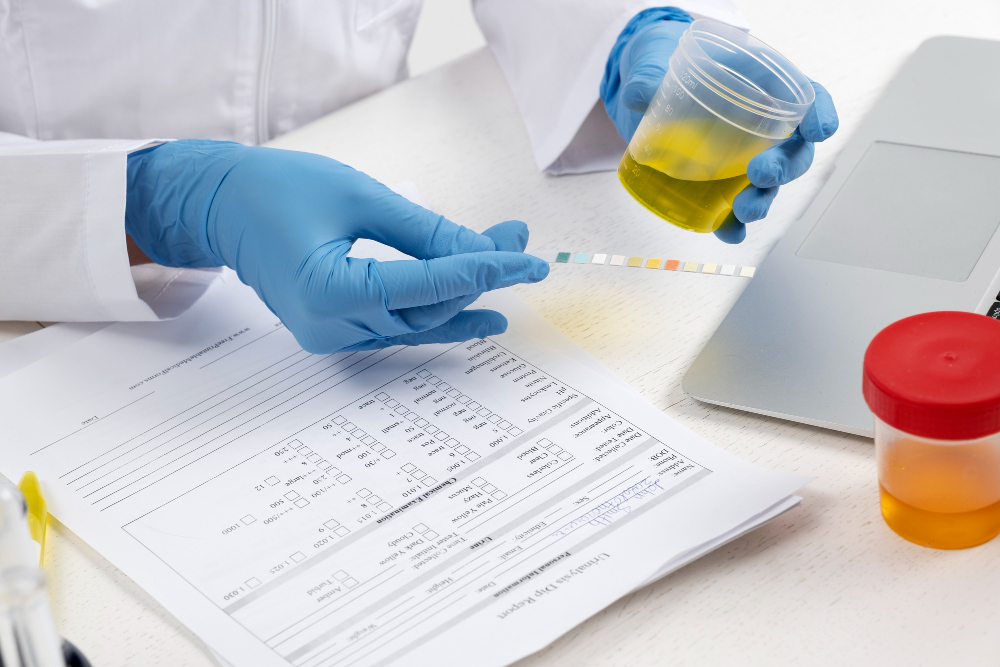
What Is a Urine Routine Test?
A urine routine test is a simple lab test that checks your urine for signs of health problems. Doctors often call this test a urine analysis or urinalysis. Because it is quick and easy, many clinics use it during regular checkups. In fact, a urine routine test can help find early signs of diseases. For example, it can show problems with your kidneys, bladder, or even your blood sugar.
Purpose of a Urine Routine Test
Doctors use a urine routine test for several reasons. First, it helps find diseases early, even before symptoms appear. Also, it can help track how well treatments are working. Sometimes, doctors use it to check for infections or other health issues. For people with chronic illnesses, this test is very helpful.
Detects kidney disease and urinary tract infections
Checks for signs of diabetes
Monitors ongoing health conditions
Helps diagnose blood in urine or unusual substances
Key Parameters Measured in a Urine Routine Test
During a urine routine test, the lab checks several things. Each parameter gives clues about your health. For example, some changes may point to infection or kidney problems. Here are the main urinalysis parameters:
Color and Appearance: Normal urine is pale yellow. Cloudy or dark urine may signal problems.
pH Level: This shows if your urine is acidic or alkaline. Abnormal pH can mean infection or kidney issues.
Protein: Protein in urine may be a sign of kidney disease.
Glucose: Sugar in urine often points to diabetes.
Blood: Blood in urine can be due to infection, stones, or injury.
Leukocytes and Nitrites: These may show a urinary tract infection.
Specific Gravity: This measures how concentrated your urine is. It helps check kidney function.
Ketones: Ketones may appear in diabetes or when the body burns fat for energy.
Doctors may also look for crystals, bacteria, or unusual cells under a microscope. Because each parameter tells a different story, the test gives a full picture of your health.
Common Health Conditions Detected by a Urine Routine Test
Many health problems can be found with a urine routine test. For example, it can spot early signs of kidney disease. Here are some common conditions this test can detect:
Kidney Disease: High protein or blood in urine may show kidney damage.
Urinary Tract Infection (UTI): White blood cells, nitrites, or bacteria suggest infection.
Diabetes: Glucose or ketones in urine can be a warning sign.
Liver Problems: Dark urine or bilirubin may signal liver disease.
Bladder Stones: Blood or crystals in urine can point to stones.
Dehydration: Very concentrated urine may mean you need more fluids.
Because the test is so useful, doctors often order a urine test for kidney disease or diabetes screening.
How to Prepare for a Urine Routine Test
Preparing for a urine routine test is easy. Usually, you do not need to fast or stop your medicines. However, some tips can help you get the best results. For example, always follow your doctor’s advice about the test.
Drink water, but do not overdo it before the test
Avoid foods that can change urine color, like beets or blackberries
Tell your doctor about any medicines or supplements you take
Use a clean container to collect your urine sample
For women, avoid the test during your period if possible
In some clinics, you may be asked for a “midstream” sample. This means you start urinating, then collect urine in the middle of the stream. This helps avoid germs from your skin getting into the sample.
Understanding Your Urine Routine Test Results
After your urine routine test, your doctor will review the results. Each parameter has a normal range. If something is outside this range, it does not always mean you are sick. For example, mild changes can happen from exercise or certain foods. Still, some results may need more tests or treatment.
Normal results mean your urine looks and measures as expected
Abnormal results may show infection, kidney disease, or other issues
Doctors may repeat the test if results are unclear
Always talk to your doctor to understand what your results mean
Because each person is different, your doctor will explain the findings in simple terms. If you had a urine routine test in your city, local labs usually provide a report within a day.
Frequently Asked Questions About Urine Routine Tests
Is a urine routine test painful? No, it is not painful. You only need to provide a urine sample.
How long does the test take? Collecting urine takes just a few minutes. Lab results are often ready the same day.
Can I eat or drink before the test? Yes, you can eat and drink as usual unless your doctor says otherwise.
Do I need to stop my medicines? Usually, no. However, always tell your doctor about all medicines and supplements.
Why did my doctor order a urine analysis? Doctors order this test to check for infections, kidney disease, diabetes, or other health issues.
What if my results are abnormal? Sometimes, abnormal results are not serious. Your doctor will explain what the results mean and what to do next.
Conclusion
If you have questions about your urine routine test or need further checks, visit Anjana Scans & Diagnostics. Our team is here to help you understand your results and support your health.