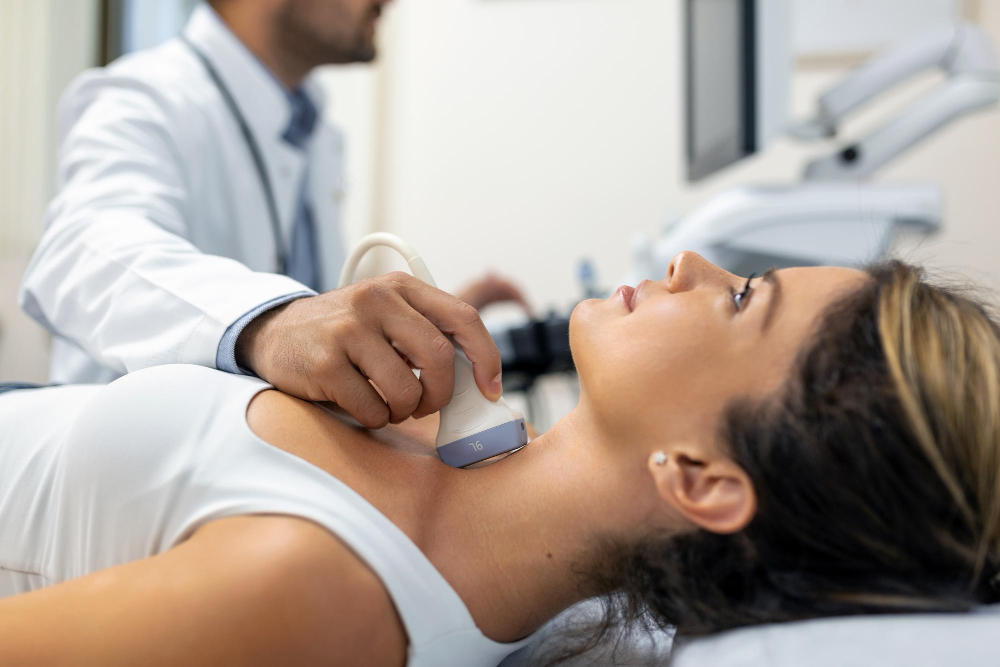
A thyroid ultrasound is a safe and painless test. It uses sound waves to create pictures of your thyroid gland. The thyroid is a small, butterfly-shaped gland in your neck. Doctors use this painless thyroid scan to check for nodules, swelling, or other changes. Since it does not use radiation, it is safe for most people. Many people find it helpful for thyroid nodule detection and for checking thyroid enlargement.
Doctors may suggest a thyroid ultrasound for several reasons. For example, it helps find lumps or nodules in the thyroid. Sometimes, it checks if the gland is larger than normal. In addition, it can help guide a needle during a biopsy. This test also helps monitor known thyroid problems over time. Because it is quick and painless, doctors often use it as a first step in thyroid care.
There are many signs that may lead your doctor to order a thyroid ultrasound. For instance, you might notice a lump in your neck. Or, you may have swelling in the front of your neck. Other symptoms include:
If you have any of these symptoms, your doctor may suggest an ultrasound for thyroid enlargement or nodule detection.
Getting a thyroid ultrasound is simple and painless. Here is what usually happens:
Most people feel no pain during the test. In fact, many say it is more comfortable than other scans.
During the thyroid ultrasound, you may feel the cool gel on your skin. However, you should not feel any pain. The test usually takes about 20 to 30 minutes. After the test, you can return to your normal activities. There is no recovery time needed. Your doctor will review the images and explain the results to you. Sometimes, you may need more tests if the ultrasound shows something unusual.
After your thyroid ultrasound, your doctor will discuss the results. Here is what they might find:
If the scan shows a nodule or enlargement, your doctor may suggest more tests. For example, you might need a blood test or a biopsy. Early detection helps manage thyroid problems better.
Thyroid ultrasound is very safe. It does not use radiation, so it is safe for children and pregnant women. There are no known risks or side effects. Some people worry that the test might hurt, but it does not. In fact, it is one of the easiest ways to check your thyroid. Myths about pain or danger are not true. Trusted sources like the World Health Organization and the CDC support its safety.
While you cannot always prevent thyroid problems, regular check-ups help. If you notice a lump, swelling, or any thyroid symptoms, see your doctor. Early testing with a painless thyroid scan can catch problems before they get worse. In addition, if you have a family history of thyroid disease, talk to your doctor about screening. Remember, only a healthcare specialist can give you the right advice for your needs.
If you notice any thyroid symptoms, consult a healthcare specialist at Anjana Scans & Diagnostics for personalized advice.
Powered By