
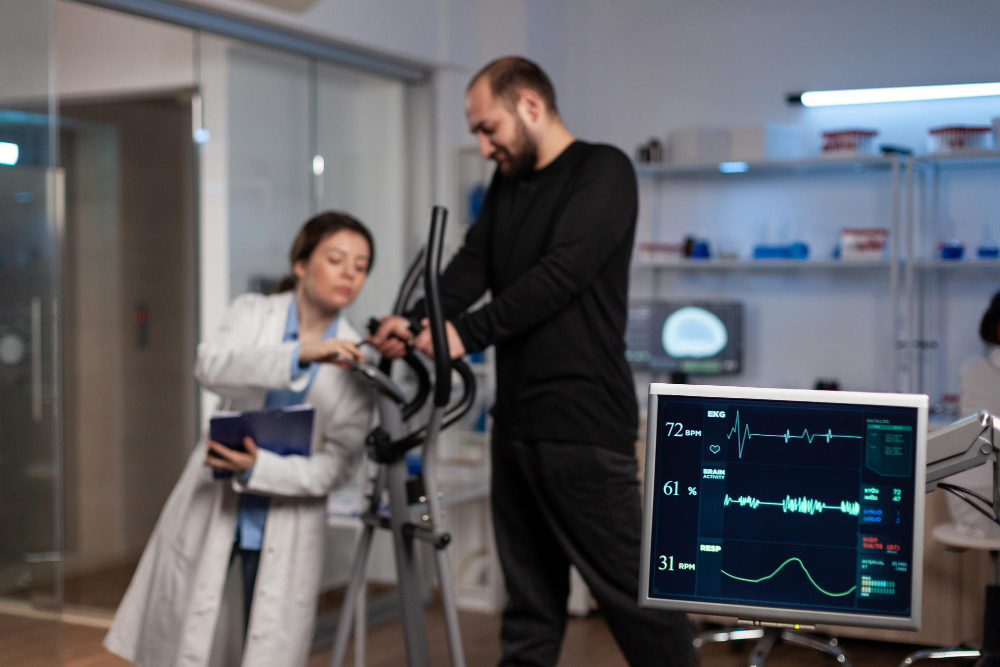
The TMT test, also called a treadmill stress test, checks how your heart works during exercise. In simple terms, it helps doctors see how well your heart handles physical activity. Usually, your heart works harder when you move. Because of this, the TMT test can show problems that might not appear when you are resting. Many doctors use this test to look for signs of heart disease or blocked arteries. According to the American Heart Association, stress tests are a common tool for checking heart health.
Not everyone needs a TMT test. However, some people may benefit from it more than others. For example, your doctor may suggest a treadmill stress test if you:
Sometimes, people with known heart problems also need this test. In these cases, it helps doctors see if treatments are working. Still, your doctor will decide if a TMT test is right for you.
During a TMT test, you walk on a treadmill while your heart is closely watched. First, a nurse places small sticky patches (electrodes) on your chest. These connect to a machine that records your heart’s activity, known as an ECG. Next, you start walking slowly. After a few minutes, the speed and slope of the treadmill increase. This makes your heart work harder, step by step. The test usually lasts 10 to 15 minutes. However, it may stop sooner if you feel tired or have symptoms. Throughout the TMT test procedure, your blood pressure and heart rate are checked.
Importantly, the TMT test for heart health can show how well blood flows to your heart during exercise. If your heart does not get enough blood, you may feel chest pain or your ECG may change. These signs can point to blocked arteries or other heart problems. In addition, the test helps doctors:
After the test, your doctor will explain what the TMT test results mean for your heart health.
For most people, the TMT test is safe. However, as with any medical test, there are some risks. Because the test makes your heart work harder, you may feel tired or dizzy. Rarely, people may have chest pain or an irregular heartbeat. In very rare cases, a heart attack can happen. Yet, trained staff watch you closely during the test. They can stop the test right away if you feel unwell. According to the CDC, serious problems during a treadmill stress test are uncommon.
Proper preparation helps make the TMT test safe and accurate. Before your appointment, your doctor will give you clear instructions. Some common tips include:
Sometimes, you may need to stop certain medicines before the test. Always follow your doctor’s advice for the best results.
Many people have questions about the treadmill stress test. Here are answers to some common ones:
For more details, consult at Anjana Scans & Diagnostics they can explain what the TMT test means for your heart health.

Powered By