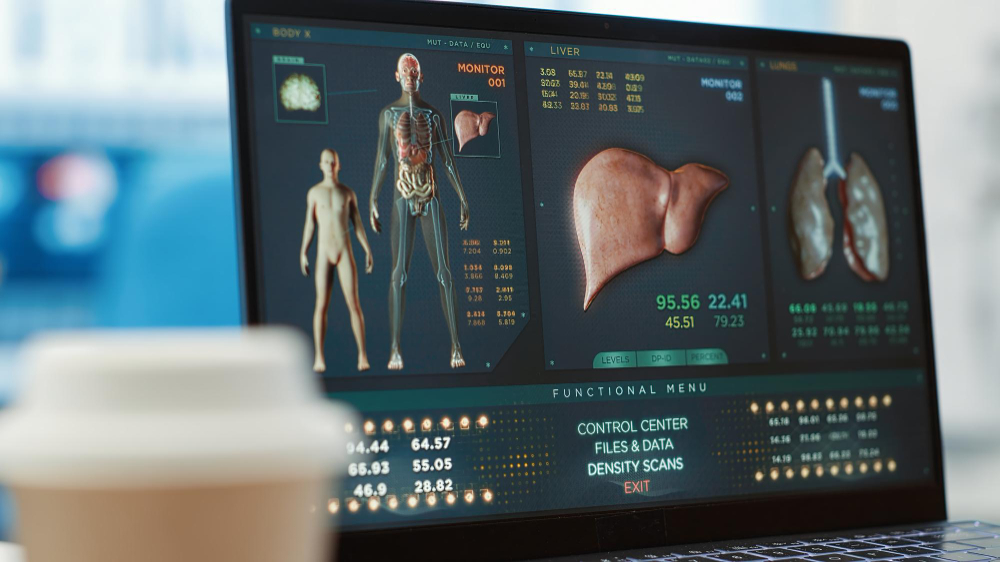
Liver FibroScan is a non-invasive liver test that checks for fatty liver and liver stiffness. It uses painless sound waves to measure how stiff your liver is. Because it is quick and safe, many doctors now use it to spot liver problems early. Early detection of fatty liver and liver stiffness can help prevent serious health issues.
Unlike a liver biopsy, Liver FibroScan does not need needles. Instead, it uses a small device placed on your skin. This device sends gentle vibrations through your liver. As a result, the machine measures how fast the waves travel. If the liver is stiff or has extra fat, the waves move differently. This helps doctors assess liver health quickly and easily.
Early detection of fatty liver and liver stiffness is very important. For example, fatty liver can lead to liver damage if not treated. Over time, liver stiffness may cause scarring, also called fibrosis. If left unchecked, this can turn into cirrhosis or even liver failure. However, finding problems early gives you a better chance to stop or reverse damage.
Often, fatty liver and liver stiffness do not cause symptoms at first. Still, you should watch for signs like:
Some people have a higher risk, such as those who:
Because symptoms can be mild, regular checks are important for those at risk.
Before the test, your doctor may ask you not to eat for a few hours. During the procedure, you will lie on your back. Next, a gel is placed on your skin over the liver area. Then, the doctor moves a small probe over the skin. The test takes about 10 minutes. Most people feel no pain. Afterward, you can return to normal activities right away.
Liver FibroScan offers many benefits compared to older tests like liver biopsy. For instance:
Because of these benefits, many doctors now prefer Liver FibroScan for liver stiffness assessment and early detection of fatty liver.
After the test, your doctor will explain the results. A low score means your liver is healthy. Higher scores may show fatty liver or stiffness. If your results are abnormal, your doctor may suggest more tests or lifestyle changes. Sometimes, you may need medicine or regular follow-up. Early action can help prevent further liver damage.
Even if your liver is healthy, you can take steps to protect it. For example:
Because liver health is vital, small changes can make a big difference.
Liver FibroScan is a safe, non-invasive way to check for fatty liver and liver stiffness early. Early detection helps prevent serious problems. If you have risk factors or symptoms, talk to your doctor about this test. Consultat Anjana Scans & Diagnostics for personalized advice on liver health.
Powered By